COMPLACENCY
So recently I travelled across the country with my brother and sister, just the three of us in a Ford Excursion on a road trip, and we’d been driving for six hours. We were tired of sitting and decided to stop, so we took an exit and went four miles down the road, found our way on a dirt path and ultimately a dead end and had to double back to the highway and drive until we found a place to stop. After we walked around and got some water, we headed back on the road. By then our GPS (named “Fate”) did not take us back to the interstate. I suppose since we were already so far off course it calculated the fastest route to be a backroad around a mountain, this tiny vein carrying traffic to the central town of what seemed like nowhere.
On this little road, before it began to rain and everything hidden in mist and that kind of mountain fog that pools together in thick bodies, I took care to look around and see for the first and likely last time what stuff of interest made up this place. There were two things I noticed immediately.
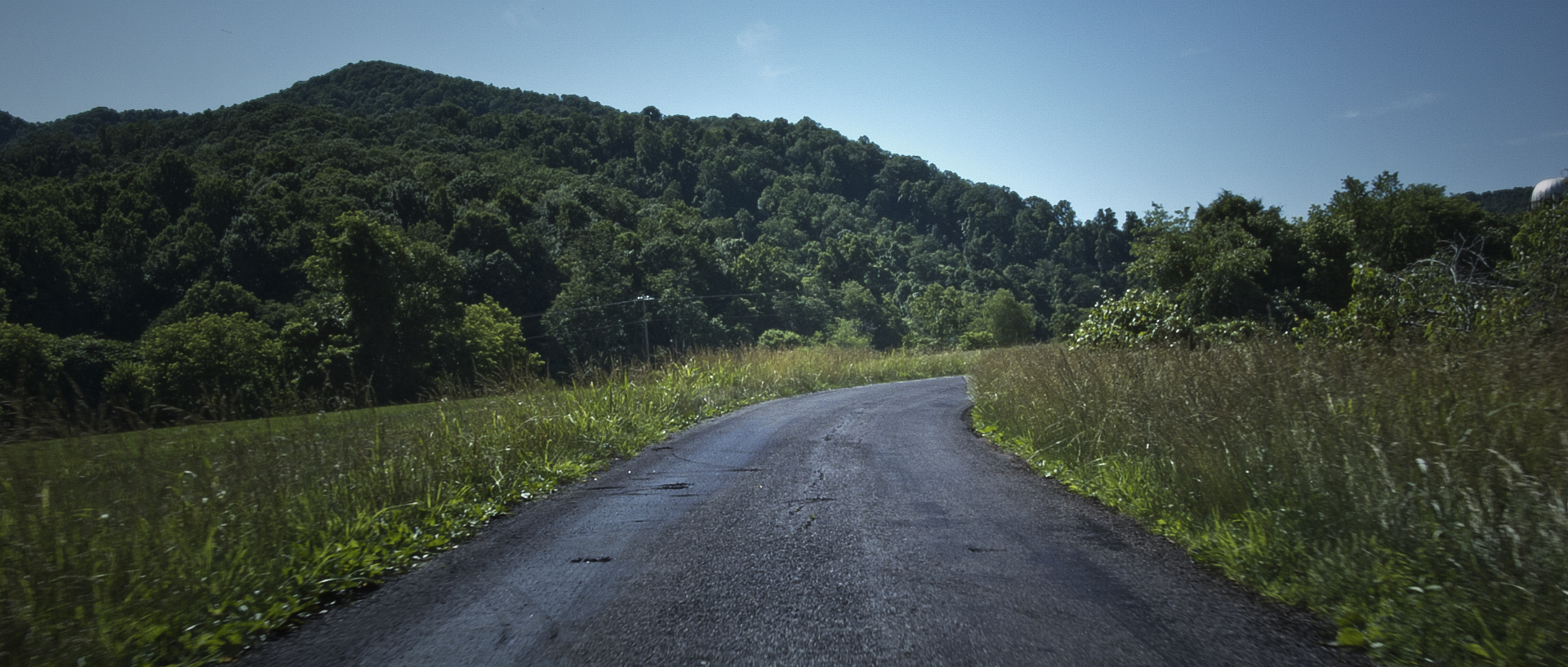
First, there were many more houses than I would have thought, so it’s safe to say more than a few people live there. I suppose I never expected such an isolated place to be so densely occupied, or that so many people would choose such a place for home. To me the place was fully unfamiliar, and had that rough, unfavorable mien that all unfamiliar places have until they cease to be so. You first wonder how you could ever come to like a place like that, but if you spend a good deal of time there you will begin to see beneath the facade, you’ll begin to understand its inner workings, and then after time it ceases to be a strange place and you cease to remember what life was like before you came. I assume this is the story of the people who live there—or of their fathers or grandfathers or whoever it was who originally settled.
Then there were graveyards. It wasn’t that there were a several graveyards around, it was that there were several graveyards every half-mile. Some of them were directly across the road from each other—one side for your mother’s folks, the other side your father’s? If we weren’t so pressured to find our way back to the main road and get to the destination I would have been quick to stop to examine the headstones. If such an abundance of graveyards means anything, it’s that much history is preserved there. If you have never visited a cemetery to explore, I recommend it. You can be walking along and see an 1865 on your left and a 2014 on your right—the representation of such a large gap in time, those two eras preserved in one place. It is no wonder graveyards have become such a clichéd film location. Beyond the fact that death is so presently felt there, it evokes such a feeling of wonder and causes one to imagine what stories will never be heard again, what tales and truths are sealed up with the gone, and compels one to realize the profundity of a mere two numbers.
A single graveyard alone can cause the realization of how complacent we all are, when the number of headstones can hardly be counted, let alone the years between. I realized this place, which none of us meant to find, is more than just the corner of nowhere—people live and die there, and call it their home. Yet we know little of it, nor will likely return.


Thank You for Reading!
If you'd like to get the latest updates, visit the Get Updates page. Remember, I am not the final authority on these subjects: everything said above is purely opinion, and should be received as such. Consult your local librarian for recommended experts. Your opinion matters as well, so comment below to share your thoughts.