How To Be A Writer:
The Complete Guide: From Appearance To Rejection

1.BE POOR. This is absolutely necessary—without it you cannot successfully accomplish the following steps. If you are already poor, move on. If you are somewhat wealthy, just try to get rid of your money. However, if you’re one of those people who have more money than time to spend it, you really can’t be a true writer. Sure, it’s unfortunate, but you might as well accept it. We all know the great writers found their inspiration in the depths of poverty.

2.SPEND MONEY. So now that you are poor, you have to spend whatever you have left. Primarily you will be buying: coffee and tea (which will keep you writing through the night, and generally be your main source of fuel throughout the day, so drink them either in turns, exchanging one for another, or simultaneously, with a mug at each hand. . .), a forty-dollar journal (leather), and an expensive pen.

3.THE FORTY-DOLLAR JOURNAL. So, don’t actually use it unless you’re in public. You don’t want to mess up such an expensive notebook with ideas you could jot down on yellow notepads (which you will buy in packs of twenty four). Also, purchase a reasonably expensive-looking pen (either a gold plated fountain pen or wooden dipping pen) or if you would rather the disposable kind, buy them in bulk from the supplier. A few hundred per box is a good start.
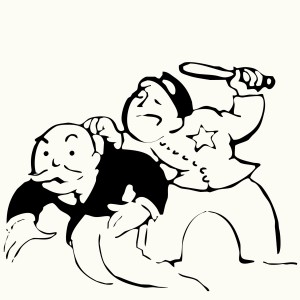
4.BE A MARTYR.(i.e., you are a poor writer making great sacrifices for the art, trying to create a masterpiece, setting aside all other desires in order to compose and publish the next bestseller.)

5.WEAR A TWEED JACKET.Essential. When you walk outside your house people have to know that you are a writer, and a tweed jacket is a great way to tell them—show them, that is. (Don’t tell.) Also, to do things properly you need to smoke a pipe, and develop a taste for European beers.

6.ROMANTICIZE EVERYTHING. Really push the facts: your fictional world actually exists, your characters really are autonomous, you really are doing nothing but exploring and discovering what already exists, digging down to the fictional artifacts and material culture of your world, scrutinizing the deepest thoughts of your characters, thoughts they haven’t even realized yet. And all this discovery is hard work—true torture—spending your days sweating blood in an unairconditioned room, pounding the keyboard until your fingers bruise.

7.STEAL AN IDEA. You won’t be able to write a good story otherwise. You can try, but generally the more original the idea the more banal, and vice versa. This is, of course, the opinion of publishers, whose logic is somewhat-justly summarized: if it sold once it will sell again. In other words, just take an old bestseller, tweak it, and send it in for the rehashing process.
8.USE YOUR YELLOW NOTEPADS. Three of them, minimum. It doesn’t matter what you write in them, or if you use half the pages for random scribbling, and you’ll often find yourself signing your autograph a few hundred times in the margins. Just do whatever it takes to fill them up. The knowledge that you spent that much time “planning” will give you the courage to write the book—the notebooks themselves won’t be of much use.

9.PRETEND. …that your characters are autonomous. Pretend that all you’re doing is following them around, writing down what they say, and what they do, and where they go. Pretend you can’t help any of these things, or even who they are—you only discovered them in their world, after all, behind the tweed jackets in your wardrobe. (But remember, only pretend. Deep down, don’t believe it. And in reality, work your characters like galley slaves.)

10.WRITE A DRAFT. As quickly as possible. This means fourteen hours a day, six days a week. (Allow yourself a few hours to sleep—you are human, after all. Also, constrain yourself to writing only six days a week and give yourself one day off to socialize. On Facebook.) It shouldn’t take more than three months to write the draft.

11.TWO CHOICES. Either A: finish draft, and spend the next six months editing. Or B: realize that you haven’t planned enough, and claim the idea still needs time to germinate. If A, move on. If B: get up, take unfinished draft, place in a drawer and let ferment.

12.FULFILL YOUR DESTINY. Once you have a draft written you will spend six months editing. Once you have a completed, edited, and fully polished manuscript, it comes time for actual work. So far you’ve had it easy, but now you have real work to do—now it’s time to fulfill your true purpose as a writer: the query letter. If you want to impress a literary agent, you have to write them an impressive query letter. You should realize that all of your work thus far has culminated to this letter. If there ever is a time in your writing life to obsess over perfection, it is now. (Note: the key to a great query letter is patience, as it should take a year to complete.)

13.WAIT.
Now that you’ve submitted your query, you have only to endure the wait—for months. You’ll be doing a lot of coffee drinking, tea brewing, and finger tapping—and hopefully some light reading—while you wait for the Literary Agents to put on their powdered wigs and pronounce your sentence.
Now that you’ve submitted your query, you have only to endure the wait—for months. You’ll be doing a lot of coffee drinking, tea brewing, and finger tapping—and hopefully some light reading—while you wait for the Literary Agents to put on their powdered wigs and pronounce your sentence.

14.CONVINCE YOURSELF
During these months of waiting, you must convince yourself that you are the one. Of the thousands of queries the Literary Agents will be considering, and despite the lottery-like odds of acceptance, you will convince yourself that your book is the one they wished for, your characters the ones they wanted, your story the one they sought.
During these months of waiting, you must convince yourself that you are the one. Of the thousands of queries the Literary Agents will be considering, and despite the lottery-like odds of acceptance, you will convince yourself that your book is the one they wished for, your characters the ones they wanted, your story the one they sought.

15.GET THE EMAIL.
If a response shows up in your inbox, rejoice. Not because you’ve been accepted (you don’t know that much yet) but simply because you received a response, because the Judges deemed you important enough for acknowledgement. Lament the many writers who never received a response (which, in itself, is the response) and who were never given the luxury of a dignified rejection.
If a response shows up in your inbox, rejoice. Not because you’ve been accepted (you don’t know that much yet) but simply because you received a response, because the Judges deemed you important enough for acknowledgement. Lament the many writers who never received a response (which, in itself, is the response) and who were never given the luxury of a dignified rejection.

16.READ IT.
But not yet. At first, avert your eyes from the email to prolong the comfort of not knowing, to put off for a little longer the finality of your ambitions, the denouement of two year’s labor over your passionate work, if not your entire career altogether. When you click it open, do so cautiously, and do not betray in a glance what should be read slowly. There is no good way to prepare yourself for the shock of rejection, not even the knowledge that it was inevitable, and acceptance impossible.
But not yet. At first, avert your eyes from the email to prolong the comfort of not knowing, to put off for a little longer the finality of your ambitions, the denouement of two year’s labor over your passionate work, if not your entire career altogether. When you click it open, do so cautiously, and do not betray in a glance what should be read slowly. There is no good way to prepare yourself for the shock of rejection, not even the knowledge that it was inevitable, and acceptance impossible.

17.GIVE UP.
Allow yourself a few week’s mourning. Lay your manuscript in a drawer where it will decompose, where the story-maggots will consume it. Cast off your tweed jacket. Put away literary fiction. Turn to more degrading forms of entertainment: the situation comedy or the reality show, and the maddeningly perpetual commercials whose repetition is some hellacious torment to devour the brain of all recognition of reality. Vow to never, never again return to the literary world.
Allow yourself a few week’s mourning. Lay your manuscript in a drawer where it will decompose, where the story-maggots will consume it. Cast off your tweed jacket. Put away literary fiction. Turn to more degrading forms of entertainment: the situation comedy or the reality show, and the maddeningly perpetual commercials whose repetition is some hellacious torment to devour the brain of all recognition of reality. Vow to never, never again return to the literary world.

19.RETURN TO THE LITERARY WORLD.
You cannot stop being a writer by acting illiterate any more than a leper can cure his disfigurements by avoiding mirrors. You have the writing disease for good—there is no cure—and you’re going to be stuck with it for the rest of your life. You can run away for a time, but you’ll always find yourself coming back to the mirror, to reality, because that’s your job. So go back to the beginning, start looking like a writer again, and then go do your work.
You cannot stop being a writer by acting illiterate any more than a leper can cure his disfigurements by avoiding mirrors. You have the writing disease for good—there is no cure—and you’re going to be stuck with it for the rest of your life. You can run away for a time, but you’ll always find yourself coming back to the mirror, to reality, because that’s your job. So go back to the beginning, start looking like a writer again, and then go do your work.


Thank You for Reading!
If you'd like to get the latest updates, visit the Get Updates page. Remember, I am not the final authority on these subjects: everything said above is purely opinion, and should be received as such. Consult your local librarian for recommended experts. Your opinion matters as well, so comment below to share your thoughts.